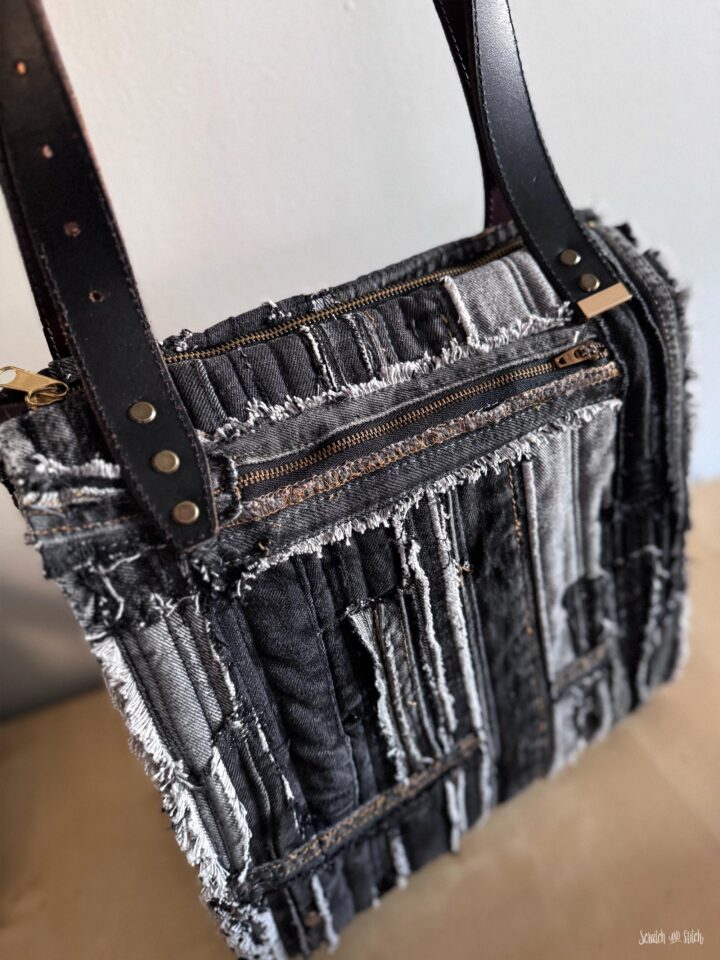
Every detail of this upcycled denim tote bag was considered: the design, materials, method, tools, and function. This black denim version of the Denim Headline Tote started as an idea that had been swirling around for a while, and I wanted to turn it into a more industrial, function-forward take on the original pattern. With sturdy structure, a top zipper, exterior pockets, waterproof canvas lining, quilted details, leather belt handles, exposed denim seams, and warm metallic hardware, this modified tote shows how upcycled denim can be turned into something rugged, polished, and highly useful.
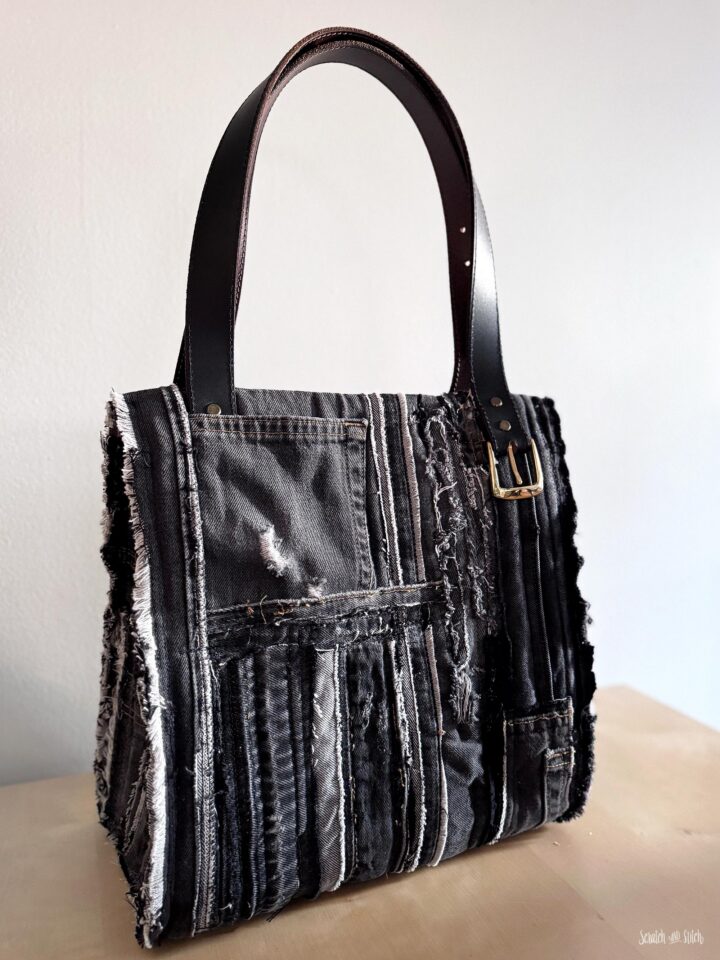
The Denim Headline Tote Bag Sewing Pattern is already designed to be a sturdy, useful everyday bag, but this version takes the pattern in a more structured and utility-focused direction. I used black and gray denim scraps, waterproof canvas, a leather belt handle, exterior pockets, zipper closures, and hardware details to create a handmade denim tote bag that feels durable, practical, and one of a kind.

A More Structured Upcycled Denim Tote Bag
This upcycled denim tote bag has the structure and presence of a small briefcase, but with the usefulness of an everyday tote. It stands tall whether it is zipped closed or wide open, has pockets for days, and includes handles with enough space to be carried over the shoulder or by hand.
Zipper Closure
A zipper closure was added to the top to help secure items inside the bag. The zipper has an open end, similar to a jacket zipper, so it can be fully opened for easy access to the interior. The bag can also be used with the zipper top fully open, which keeps the wide-open tote functionality of the original pattern.
Interior Pockets
Inside, one wall has a deep zipper pocket that is perfect for keys, a small wallet, or other secure items. There is also a matching slip pocket that is just the right size for a phone. The opposite side has a large slip pocket that is big enough to fit a tablet or iPad.
Exterior Pockets
For this version, I moved the side pockets to the outside of the bag instead of keeping them inside like the original pattern. This makes room for a water bottle or coffee mug on the outside, leaves more space inside the bag, and makes drinks easier to access. Exterior bottle pockets are one of those small changes that make a handmade tote bag feel instantly more useful.
Upcycled Denim Bag Design and Style
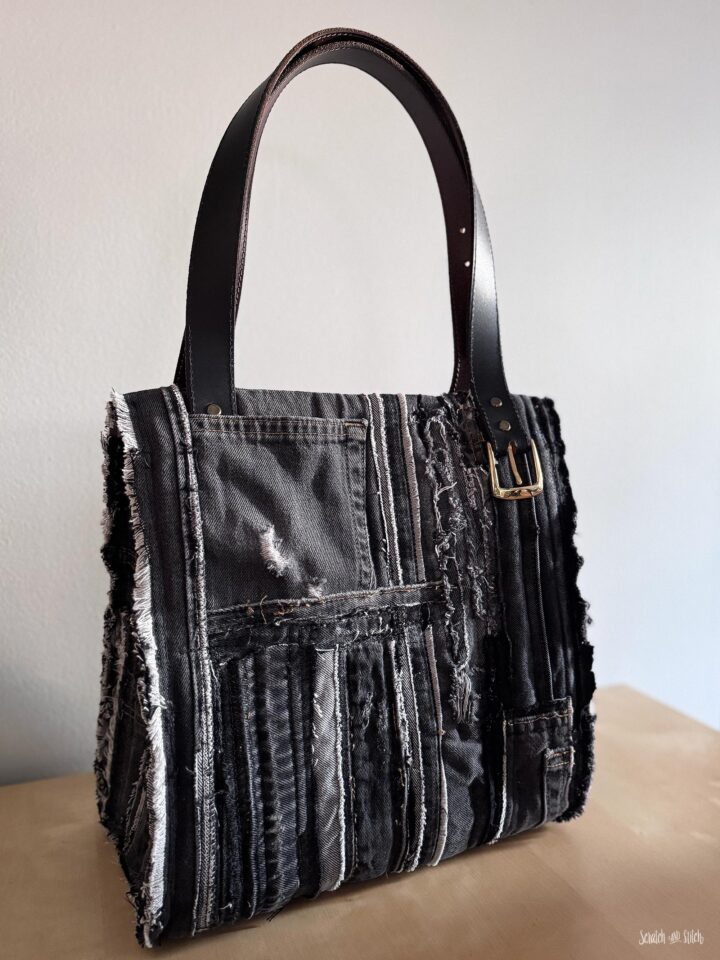
This bag stays true to many of my favorite project details, including upcycled materials, denim scraps, visible texture, and a well-loved leather belt. The exterior is covered with strips of black and charcoal gray denim, with frayed edges and exposed seams adding texture and movement. Hundreds of stitched lines and multiple thread colors give this upcycled denim tote bag both visual interest and a sturdy build.
I also added extra details from old jeans, including rivets, buttons, a back pocket, and repurposed zipper flies used for the zipper pockets. These small details help the finished bag feel intentionally handmade, not overly polished or mass-produced.
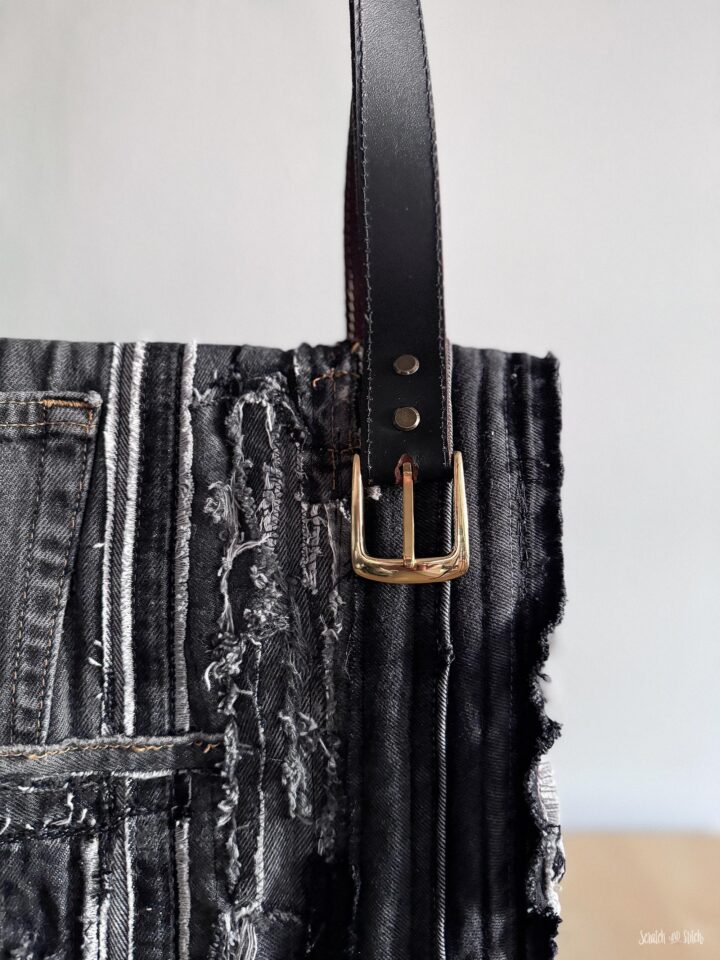
A well-worn but sturdy leather belt made the perfect handles for this modified tote bag. Its chunky brass buckle contrasts against the dark denim and pairs beautifully with the golden thread, brass zippers, gold zipper, and brass rivets used throughout the bag.
While the outside of the bag is ripped, torn, and worn, the inside is chic and sleek. The lining is made with mauve waterproof canvas with quilted lines, a grid-like texture, and a subtle sheen that catches the light. The softer interior color contrasts beautifully with the black denim, gray denim, and warm metallic hardware.
Turning Old Denim Into a Functional Tote Bag
One of my favorite things about sewing with denim is how much character the material already has before the project even begins. Worn jeans, denim scraps, pockets, seams, rivets, and zipper flies all bring texture and history into the finished piece.
For this tote, the upcycled denim gives the bag its rugged exterior, while the waterproof canvas lining adds a cleaner and more refined contrast inside. The mix of raw denim texture, structured construction, and polished hardware is what makes this bag feel both handmade and elevated.
Modifying the Original Denim Headline Tote Pattern
While this is a modified version of the original Denim Headline Tote Bag Sewing Pattern, it is not far from the base design. The same overall shape, side pocket concept, and belt handle style are used to make the bag. The exterior zipper pocket adds a bit more complexity to the construction, and the interior pocket layout was customized specifically for this version.
What I love about the Denim Headline Tote Bag Sewing Pattern is how versatile it can be. The bag can be made simple and straightforward, or it can be heavily modified by adventurous makers who want to experiment with pockets, closures, materials, and hardware.
This version had nothing holding it back when it came to style and function. By experimenting with upcycled denim, waterproof canvas, leather belt handles, exposed seams, zipper pockets, and hardware, a basic tote bag sewing pattern was turned into something that feels elevated and one of a kind.

Materials Used to Make this Bag
Upcycled Denim
Much of the denim used in my upcycled denim projects are donated to me by friends and family. Sometimes I will purchases thrifted or garage sale denim jeans if I’m looking for a particular color or the price is right.
Waterproof Canvas
I found the waterproof canvas used here at my local wholesale fabric store. If purchasing online, I recommend Ottertex Waterproof Canvas.
Belt Handles
I like to find belts at thrfit stores for my upcycled denim tote bags. I always carry a small measuring tape with me to make sure the belt length is over 40″. This belt was 48″. SCORE!
Hardware
– Zippers for the pockets were sourced from denim jeans. These were very large jeans so the zipper flys were extra long making the perfect zipper pocket closures.
– The top zipper is an open-end (separating) zipper that’s usually used for jackets and coats.
– Chicago screws were used to secure the belt handle to the bag. This is an extra secure way to attach bag handles.
– I added a strap end cap to the exposed end of the belt handle.
Foam Stabilizer
The only foam stabilizer I use is ByAnnie.com’s Soft & Stable. It is so easy to work with, makes beautiful textured quilting, and holds up over use and time.
Thread
Several colors of thread were used for both the decorative topstitching and the construction of the bag. I used all Bonded Nylon #69 / Tex 70 thread.
Memory Love Bots
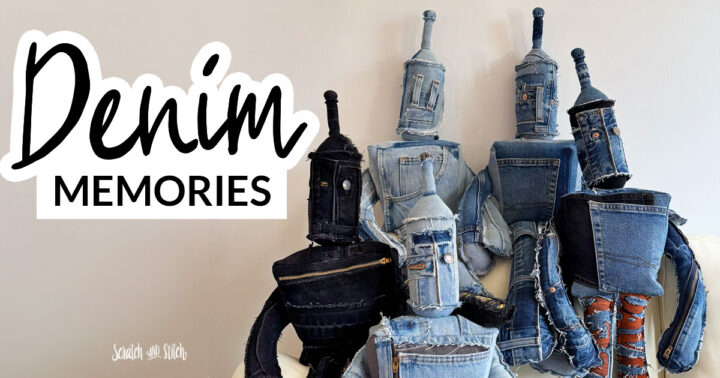
A handmade collection of denim robots made for a family from a loved-ones jeans.
Tools Used to Make this Bag
Sewing Machine
I used both of my straight-stitch sewing machines to complete this upcycled denim tote bag. Most of the upfront construction and topstitching was done on my Janome HD (my absolute favorite machine!) with the final sewing on my TechSew 4800. While the Janome may have been able to handle the final thick layers, the cylinder arm of the TechSew made it easier to finish.
Hole Punch
I use this Japanese screw punch to make holes in thick layers and leather.
Walking Foot
A walking foot presser foot on my machine makes topstitching and quilting lines a breeze.
Glue Stick
– A standard Elmer’s school glue stick works great for temporary hold of denim strips. I always have this on hand.
– Alongside that, I keep a stock of Elmer’s CraftBond Glue Sticks. These have a bit more hold and work really great with leather.
RELATED: Check out the Minnesota Flag Inspired Denim Tote Bag.
Make Your Own Upcycled Denim Tote Bag
This bag is a modified version of the Denim Headline Tote pattern. The original pattern does not include every feature shown here, but it is a great starting point for creating your own customized tote bag.

Headline Tote Bag Sewing Pattern
Start with the original Denim Headline Tote Bag Sewing Pattern and make it your own. Use upcycled denim, sturdy fabric, quilted details, or your favorite handles to create a useful everyday tote bag with your own style.
I love seeing your versions of my sewing patterns! Tag @scratchandstitch on social media or send me an email to share your creations.